Diabetic Neuropathy: A Foot Check Before and After a Winter Walk
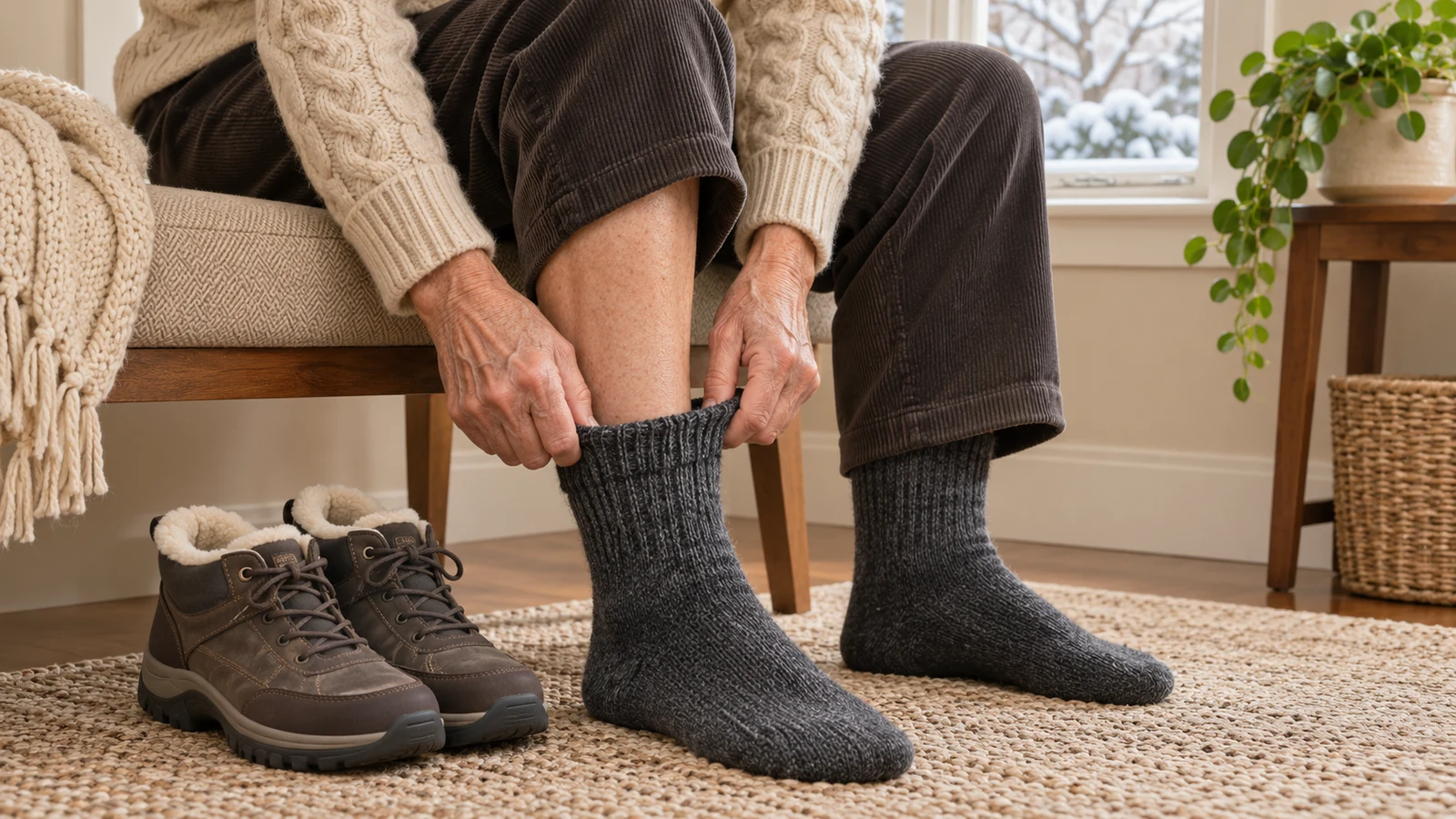
On a cold morning, thicker socks can make familiar boots fit differently. A damp sock, a folded lining, or a small stone can rub for an entire walk. If diabetic neuropathy has dulled sensation in your feet, you may discover the irritation only when you take your boots off. Pairing two quick checks with putting on and taking off your boots makes them easier to remember.
Before the walk: check what will touch your feet
Look inside each boot for grit and check that the lining and insole lie flat. Start with clean, dry socks that fit without bunching. Try on your boots with the socks you actually plan to wear. Check that your toes have room and that your heel stays in place as you walk. Lined, waterproof boots can help keep feet warm and dry. Break in new boots with short periods of wear and check your skin when you take them off.
If you wear prescribed footwear or inserts, ask your foot care team how to pair them with winter socks. A bulkier sock can change the fit of footwear that was adjusted for you.
After the walk: look where boots tend to rub
Take off both boots and socks somewhere with good light. Look at the heels, the sides and tips of the toes, between the toes, and the soles. A mirror or help from another person can make hard-to-see areas easier to check. Look for a new blister, cut, or patch of color change, especially where the edge of a boot or a sock seam pressed against the skin. Wet socks are a reason to check whether water got into the boot before wearing it again.
Change into dry socks and warm up indoors. With reduced sensation, direct heat from a heating pad, hot-water bottle, or space heater can burn the skin before you feel it.
Know what to report
If you have diabetes and notice a new blister, sore, or unexplained redness or swelling, contact your foot care team promptly. A change can matter even if the area does not hurt. If redness is spreading, the foot becomes unusually warm or swollen, or there is drainage, seek medical advice without delay. It helps to describe the location, when you first noticed it, and what shoes and socks you were wearing.
References
This article provides general health education. A clinician can assess foot changes and advise on footwear and activity for your situation.