When Parkinson’s Freezing Happens at a Doorway
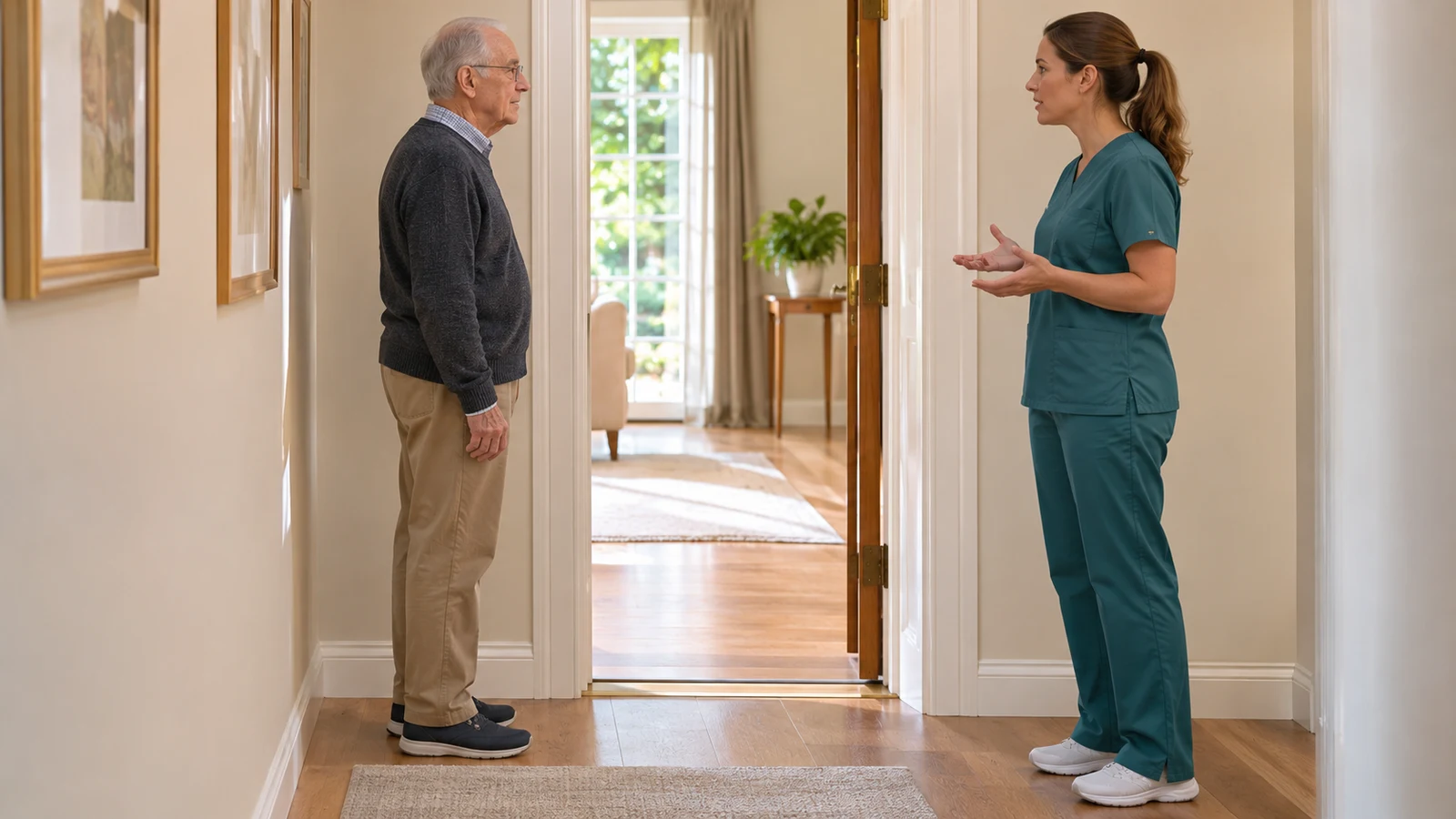
You are halfway to the kitchen when your feet suddenly feel stuck at the doorway. A brief, involuntary interruption like this can occur with Parkinson’s and is called freezing of gait. Doorways and turns are common settings. If it happens to you, describing the exact situation can help your care team assess the problem and plan ways to reduce fall risk.
Notice what was happening just before you stopped
Write down which doorway it was, whether you were starting to walk or turning, and whether you were carrying something or talking. If you can, note when the episode happened relative to your usual medication schedule. Include any stumble, near-fall, or fall. A few examples from ordinary days are enough to start the conversation. Let your team know if the episodes are becoming more frequent or affecting where you feel safe walking.
Plan how a companion can help
Talk ahead of time about what you would like a companion to do if you pause at a doorway. Give yourself time to regain your balance. A companion can clear the space and wait for you to say what help you want. Pulling you forward or rushing the next step can make it easier to lose your balance. At home, clear clutter and keep the doorway well lit.
Ask which cues you can practice safely
A physical therapist familiar with Parkinson’s can assess how you move and help you practice a cue, such as a rhythm or a visual spot to aim for. A cue that helps at one doorway may be less useful when you turn in a crowded room. Ask how to adapt the cue to those situations and whether a companion can join a session. Share any pattern you notice around medication timing with your prescriber before making changes.
References
This article provides general health education. A clinician or physical therapist can assess walking changes and tailor advice to your circumstances.