Speech-in-Noise Testing: What to Expect at an Audiology Visit
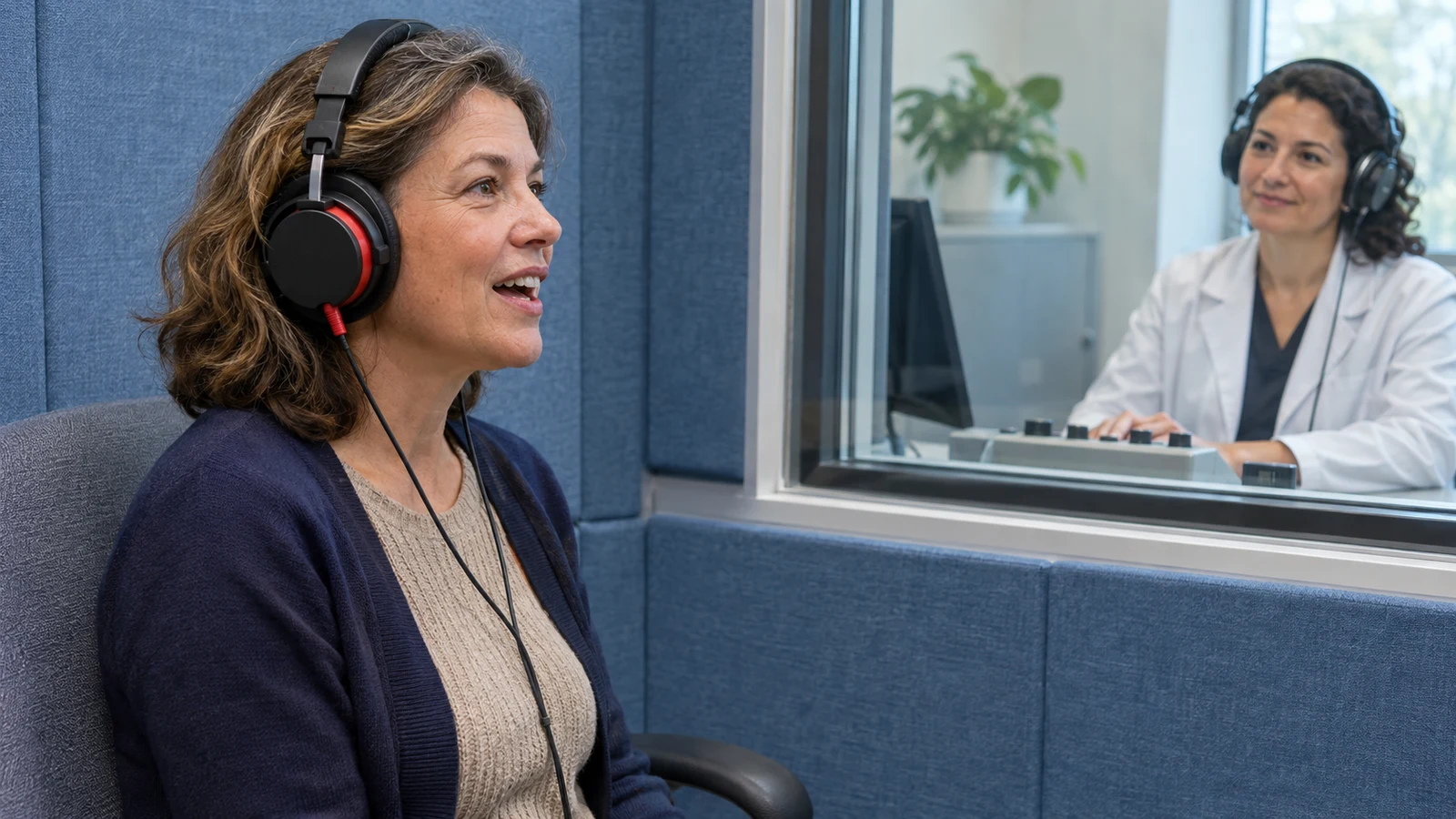
If you can follow a conversation in a quiet room but lose track in a busy restaurant, tell your audiologist about both situations. A standard hearing test checks how soft a tone can be before you stop hearing it. A speech-in-noise test asks a different question. How well can you make out words when another sound competes with the speaker?
What you do during the test
You may listen through headphones or through speakers, depending on the test. You hear recorded words or short sentences along with background sound and repeat what you heard. The audiologist may change the volume of the speech or of the background noise. Some tests use a steady sound, while others use the sound of several people talking.
What the score describes
Some tests report the difference in loudness between speech and background noise needed to hear a target share of the words. Other tests report how many words you identified correctly at a set noise level. Ask which kind of score you received and what it can tell you about listening in the places you find difficult. The audiologist interprets it alongside your other hearing results and your day-to-day experience.
Bring an example from your own day
Describe one setting where you lose track, such as a meeting with several speakers or dinner with a fan running. Mention whether you can see the speaker’s face and whether a hearing aid helps in that setting. Tell the clinic which language you are most comfortable listening in so you can ask whether suitable test materials are available. If you use hearing aids, ask whether the clinic wants you to bring them and whether testing with them would help answer your question.