Parkinson’s and Standing Blood Pressure: What the Check Measures
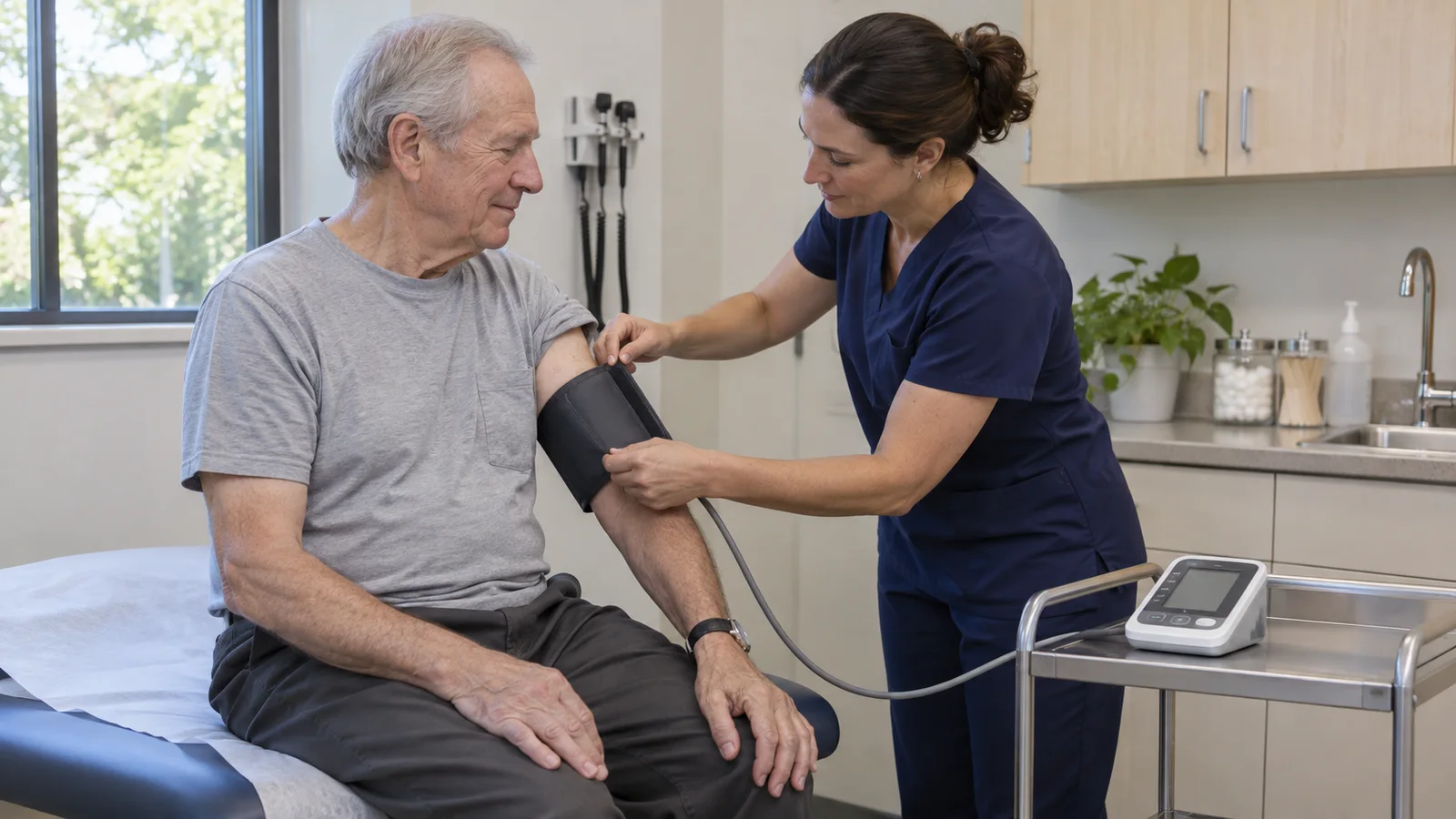
You stand up from a chair and the room seems to dim. By the time you sit down again, the feeling has passed. A routine blood pressure reading taken later, while you are seated, might give your care team only part of the story. For people with Parkinson’s, an orthostatic blood pressure check compares readings in different positions. Knowing what happens during the check can help you describe the symptoms that brought you there and ask what the results mean for your next steps.
If you are browsing related educational materials, the product page for The Parkinson’s Protocol by Jodi Knapp describes the guide and its contents. The information below focuses on the blood pressure assessment a medical professional may use when you feel lightheaded on standing.
Why the clinic checks more than one position
When you stand, gravity causes some blood to shift toward your legs and abdomen. Your nervous system usually responds by tightening blood vessels and adjusting your heart rate so that enough blood continues to reach your brain. Parkinson’s can affect the automatic processes that support this response. If blood pressure drops on standing, clinicians may call it orthostatic or postural hypotension. It can contribute to falls, and some people with Parkinson’s have a measurable drop even if they notice few symptoms.
The timing can help the clinician distinguish different kinds of dizziness. Feeling faint or seeing your vision dim just after getting up is one description. Feeling that the room is spinning when you roll over in bed is another. Use your own words and mention whether sitting or lying back down brought relief. Parkinson’s, dehydration, certain medicines, and other health problems can affect blood pressure. A positional pattern offers a clue that your care team can consider alongside the rest of your history.
What normally happens during the measurement
In one standard approach used by the CDC’s fall-prevention program, a clinician lets you rest lying flat for about five minutes. They measure your blood pressure and pulse, help you move to a standing position as needed, and repeat the measurements at around one minute and three minutes after you stand. You may be asked to remain quiet and still during each reading. The clinician can support your arm so the cuff stays around heart level and select a cuff that fits.
Before getting up, tell the person checking your blood pressure if you have fainted recently or need a walking aid or help to stand. If you start to feel unsteady, weak, sweaty, or as though your vision is dimming, say so right away. Ask to sit or lie down if you feel you might fall. The clinician can record when the symptoms began, even if you do not reach the next scheduled measurement. Avoid trying to reproduce a near-faint on your own for the sake of getting a number.
Some offices first compare seated and standing readings, especially if an exam couch is unavailable. A lying-to-standing check can detect changes a seated comparison may miss. If the team used a seated baseline and episodes continue, ask whether another measurement would be useful and how to do it safely. If standing is difficult for you, tell the team before the appointment so they can consider what assessment is feasible.
How to read the numbers in context
Blood pressure has two numbers. The top, or systolic, number is the pressure when the heart beats. The bottom, or diastolic, number reflects the pressure between beats. Clinicians commonly look for a fall of at least 20 mm Hg in the top number or 10 mm Hg in the bottom number within three minutes of standing. They also pay attention to symptoms that occur during the measurement. A resting result can look ordinary even when the standing change is important.
For example, imagine a reading of 132/78 while lying down and 108/70 while standing. The top number fell by 24 and the bottom by 8. In that example, the size of the change in the top number is enough to be worth discussing. The two readings cannot explain the cause on their own. The clinician looks at the pulse, symptoms, medicines, and the circumstances of the measurement before deciding what the change means.
Pulse can help explain how the body responded to standing. Some medicines can affect heart rate, so the pulse is best interpreted with your medication list. A blood pressure drop may also occur alongside high blood pressure while lying down. That is one reason to bring the complete set of readings and their positions to your clinician. A suggestion aimed at raising a standing reading could have implications for your lying blood pressure, so discuss any changes to medicines, salt, or fluid intake first.
What to bring if episodes happen away from the clinic
Unsure what to write down? Start with one actual episode. Give the time, what position you were in before it happened, and how long you had been standing when you first felt different. Note whether symptoms eased when you sat down, and say if you needed help, fell, or hurt yourself. A note such as “felt faint about three minutes after getting up from lunch, sat down, and felt better within a minute” is easier to interpret than “dizzy all afternoon.”
Note anything that varied from your usual routine, such as a hot shower, a large meal, a recent illness, or a new prescription. Bring the names and doses of your medicines and when you usually take them. Include Parkinson’s medicines and prescriptions from other clinics, such as blood pressure medicines, diuretics, or antidepressants. If the timing of a dose changed, say when. Continue taking medicines as prescribed and ask the prescriber about any suspected effect before making changes.
If someone witnessed a fall or apparent faint, their account can help. Ask what they saw before and after it, how long you seemed unresponsive, and whether you were able to speak or move normally afterward. If there were palpitations or chest pain, report those details. Seek emergency help if someone faints and does not fully recover, has chest pain or difficulty speaking or moving, or was seriously injured. If you have fainted, discuss the episode with a healthcare professional even if you feel better.
What to ask if the readings and symptoms tell different stories
A single check reflects conditions on a particular day. Your usual symptoms may happen first thing in the morning, after eating, or just seconds after you get up. Those episodes may not happen during an afternoon appointment. Tell the clinician about that difference. They may consider another check at a different time, a longer observation, or an assessment for other causes. If a home log is appropriate, ask the team to explain the safe procedure, which positions to record, and when to call about a result or symptom.
Ask how the clinic will communicate the findings and which member of your team should receive them. Your neurologist may manage Parkinson’s medicines while your primary care clinician manages blood pressure. Sharing the same set of readings and an up-to-date medication list can help both teams understand what happened. If you have already had a few near-falls, mention those when arranging follow-up and ask how to get help assessing your risk.
If you receive instructions to take readings at home, ask where the cuff should sit and whether you should bring the monitor to your next visit. Keep the top and bottom numbers together with any pulse reading the monitor shows. If symptoms cut a planned measurement short, record what you felt and what you did next. A blank space with that explanation is more useful than a reading from a different position entered in its place.
Take the whole pattern to your follow-up
The check compares what happens when you rest and when you stand. The story you tell adds the part a cuff cannot capture, including how soon the symptoms start, which daily activities set them off, and whether you feel better when you sit down. Ask for a copy of the readings with the position and time next to each one. For a separate overview of the author’s digital guide, see the product details for The Parkinson’s Protocol.
Sources and further reading
RECOMMENDED READING
A practical guide for readers interested in Parkinson’sA guide to Parkinson’s

The Parkinson’s Protocol
A digital guide by Jodi Knapp. Review the program overview and contents before deciding whether it is relevant to you.
- Topic: Parkinson’s
- Author: Jodi Knapp
- Format: digital guide
 Secure checkout through ClickBank
This page contains affiliate links. We may earn a commission if you purchase through them, at no extra cost to you.