A Warm, Swollen Foot With Neuropathy: When to Ask About Charcot Foot
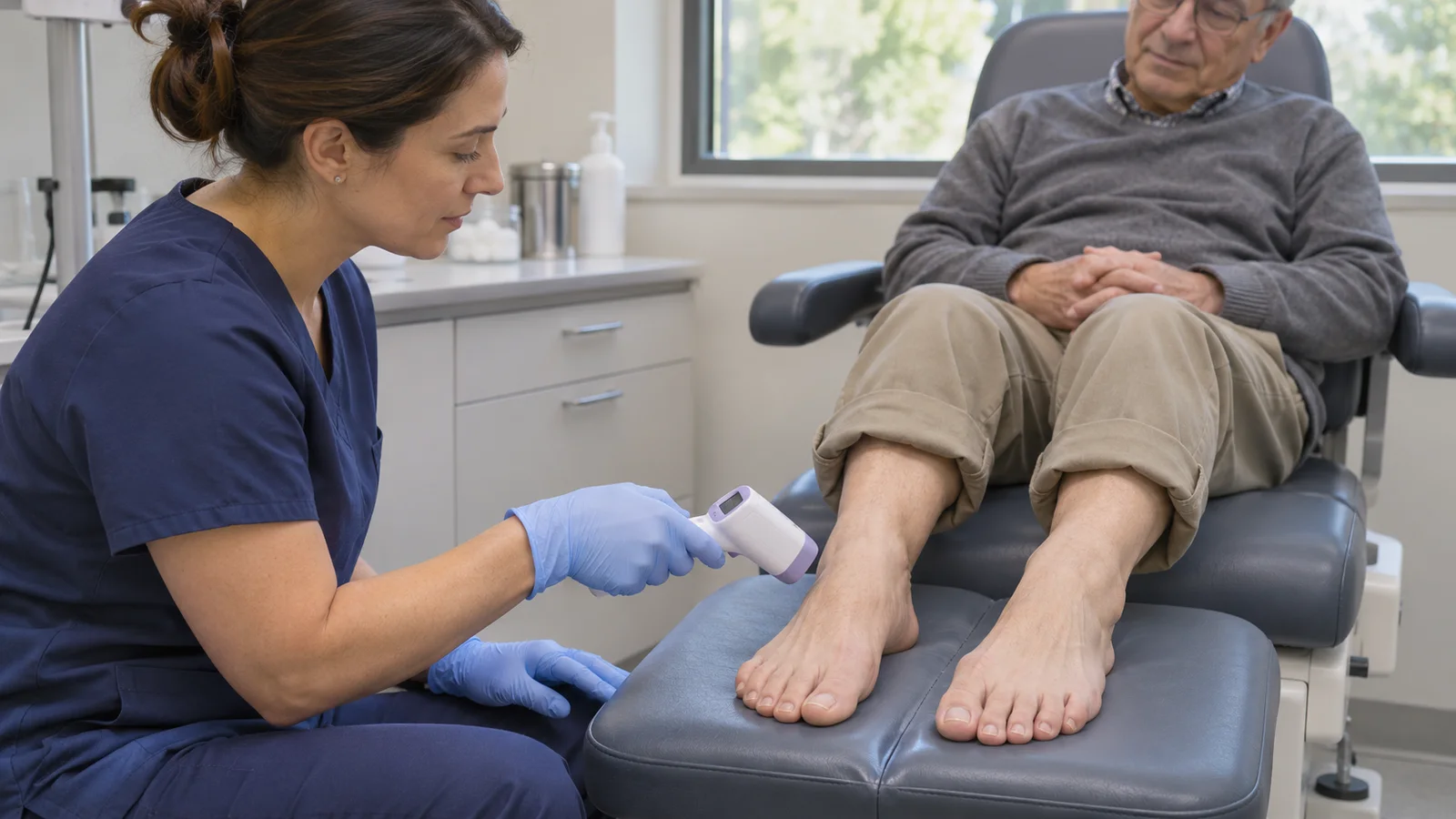
If you have peripheral neuropathy and one foot suddenly looks swollen or feels warmer than the other, get urgent medical advice, even if it hardly hurts and you cannot see a cut. For people with diabetes and reduced sensation, one condition the foot team may check for is active Charcot foot, which can damage bones and joints. Infection and other problems can cause similar changes. When you call, say which foot has changed, when you first noticed it and whether you have diabetes or loss of feeling. Those details can help the clinic decide where you should be seen.
Jodi Knapp’s catalog includes Neuropathy No More, a digital guide on peripheral neuropathy. This article covers what an urgent foot assessment can check and what the results may mean for your next appointment.
Why a foot can be warm and swollen without much pain
Peripheral neuropathy can reduce the ability to feel pressure, pain or an injury. When that happens, the foot can carry weight on injured tissue without much warning. In active Charcot foot, inflammation affects bones and joints. Small fractures, changes in joint alignment and a change in the foot’s shape can develop. Some people recall a twist, fall or increase in activity. Others cannot point to any particular event. A foot may still look its usual shape early on, with only new swelling, warmth or a change in skin color.
People sometimes notice the change when a shoe that fit yesterday feels tight or a sock leaves a deeper mark on one side. Redness may be harder to see on darker skin, so tell the clinic if you mainly noticed warmth, puffiness or a difference between the two feet. The skin can be intact even when something has changed beneath it. A foot that looks different and feels the same to you can still need careful examination when your sensation is reduced.
What to say when you ask for urgent care
Start with the change itself. For example, “I have diabetes and reduced feeling in both feet. My left foot is warmer and more swollen than my right, and it started this morning.” Then mention any new wound, blister, drainage, fever or feeling unusually unwell. Add any recent fall, ankle twist or previous Charcot foot, and say whether you have had an ulcer or foot surgery before. If you have had a change in the shape of your foot or ankle, describe it as best you can.
Contact your diabetes foot service, urgent care service or another local clinician who can arrange an assessment. If you have a direct number for an established foot team, use it. Ask where to go if the team is closed and how to get there safely. Avoid walking on the foot to see whether it hurts. Ask the team how to protect it while you arrange transport, especially if you usually need help walking or getting up and down stairs.
Seek emergency care if you have a foot wound with fever or feel very unwell with signs of an infection, or if the foot suddenly becomes cold, pale or discolored with other signs of poor circulation. Rapidly spreading skin changes or a deep wound also need urgent assessment. If you are uncertain what service to use, describe the symptoms to local urgent medical services immediately. A photo may help show what changed if the team asks for one, but you can place the call without it.
For someone who already has a regular foot appointment, the change can be easy to file away as something to mention later. Call about the new symptom as soon as you notice it, and say when the existing appointment is booked. You may reach a receptionist or nurse who does not know your medical history. Give them the same basic information even if it is in your record. If they ask you to come in sooner, bring your current shoes or prescribed device only if it is practical and safe to do so.
What the exam and scans can check
The clinician may examine both feet to compare skin temperature, swelling and shape. They may check your pulses, look for skin breaks or pressure marks, and check sensation. They may also ask if swelling is limited to the foot or extends farther up the leg. A warm swollen foot can have causes such as a skin infection, a fracture or a joint problem. Finding neuropathy helps explain why you may feel little pain, while the rest of the exam and any tests help identify the cause of the swelling.
Plain X-rays can show fractures or changes in where the bones meet. An early X-ray can look normal even when the clinician has reason to suspect active Charcot foot. In that situation, an MRI may show changes in the bone and surrounding tissue that plain X-rays cannot pick up. Ask whether a normal result changes the plan and what to do before the next visit. The foot team may take steps to protect the foot while tests are still underway.
It is useful to say if you already had imaging elsewhere and when it was taken. An urgent care visit, for example, may have included an ankle film, while a foot specialist may need different views. Bring a copy of the report if it is readily available, or tell the team where to request it. Mention whether the foot has become warmer, more swollen or differently shaped since those pictures were taken. The time course helps the clinician decide how to interpret a result.
Why the team may talk about offloading
Offloading means reducing the stress on the foot and ankle during standing and walking. If active Charcot foot is suspected, the team may recommend a specialist cast or protective device before the diagnosis is fully settled. This can help keep the joints still while the team investigates. The device and the amount of weight you can put on the foot depend on your assessment. Ask for clear written instructions, including whether you should use a walking aid, when the device should be checked and whom to call if it causes rubbing or becomes damaged.
Explain what getting around at home actually involves. Tell the team if your bedroom is upstairs, if you live alone, or if the other foot also has reduced sensation or a wound. If you are expected to use crutches, a walker or a wheelchair, ask for help working out how to transfer safely and whether you need support at home. The foot that is doing more work deserves attention too. A clinician can check how your footwear and the activity changes affect pressure on that side.
Follow-up may include repeated examinations, comparison of foot temperatures and, when appropriate, more imaging. With confirmed Charcot foot, treatment can take several months. Ask what findings the team will use to decide when it is safe to change the level of protection. A foot may feel more comfortable before the bones and joints are ready to bear their usual load. If a cast or boot becomes loose, wet or damaged, or you notice new pressure, skin changes or discomfort, phone the care team for instructions.
Ask the clinic to explain who will change or refit the device as the swelling changes. People with reduced sensation may miss the early discomfort caused by a pressure spot. A change you can see, such as a new mark near the edge of the device, is worth mentioning promptly. If a device has been fitted to stay in place, leave adjustments and removal to the treating team.
Bring a short plan home from the appointment
Before you leave, try to get three answers in writing. What can I put on this foot and how much weight can it safely take? When and where is the next check? What change should prompt an urgent call before then? The answer may be different at different stages of care. Once the foot is ready for a different shoe or device, ask whether a follow-up fitting is needed and what to watch for when you start wearing it. If swelling or warmth returns, describe how that compares with the original episode and call the service that gave you your plan.
The product page for Jodi Knapp’s Neuropathy No More describes the guide and its purchase terms. For a foot that has newly become warm and swollen, the immediate priority is getting it assessed. Mention reduced feeling up front so the team understands why the lack of pain should carry less weight when deciding how soon to see you.
Sources and further reading
- Diabetes UK, Charcot Foot and Diabetes
- National Institute for Health and Care Excellence, Diabetic Foot Problems: Prevention and Management
- International Working Group on the Diabetic Foot, Guidelines for Active Charcot Neuro-Osteoarthropathy in Diabetes
- Worcestershire Acute Hospitals NHS Trust, Lower Leg Immobilisation
RECOMMENDED READING
A practical guide for readers interested in neuropathyA guide to neuropathy
Neuropathy No More
A digital guide by Jodi Knapp. Review the program overview and contents before deciding whether it is relevant to you.
- Topic: neuropathy
- Author: Jodi Knapp
- Format: digital guide
 Secure checkout through ClickBank
This page contains affiliate links. We may earn a commission if you purchase through them, at no extra cost to you.